CONTACT
MESSAGE / FROM CEO

Nature connects children and communities.

Regional revitalization through ikimon.life

Origin Story

I flipped over a stepping stone by the front door, and found an earwig underneath.

Iwanai, Hokkaido.
The first hometown I lived in, from kindergarten through first grade.

There was the ocean. There were mountains. There was a river.
And in front of the house, there was a garden so lush that my childhood self could only describe it as a "jungle."

Flipping over the stone pavers by the front door to catch earwigs.
Trying to raise them, observing them every day.
In autumn, going to the ski slope to catch more than 10 migratory locusts.
That alone made the world the most fascinating place.

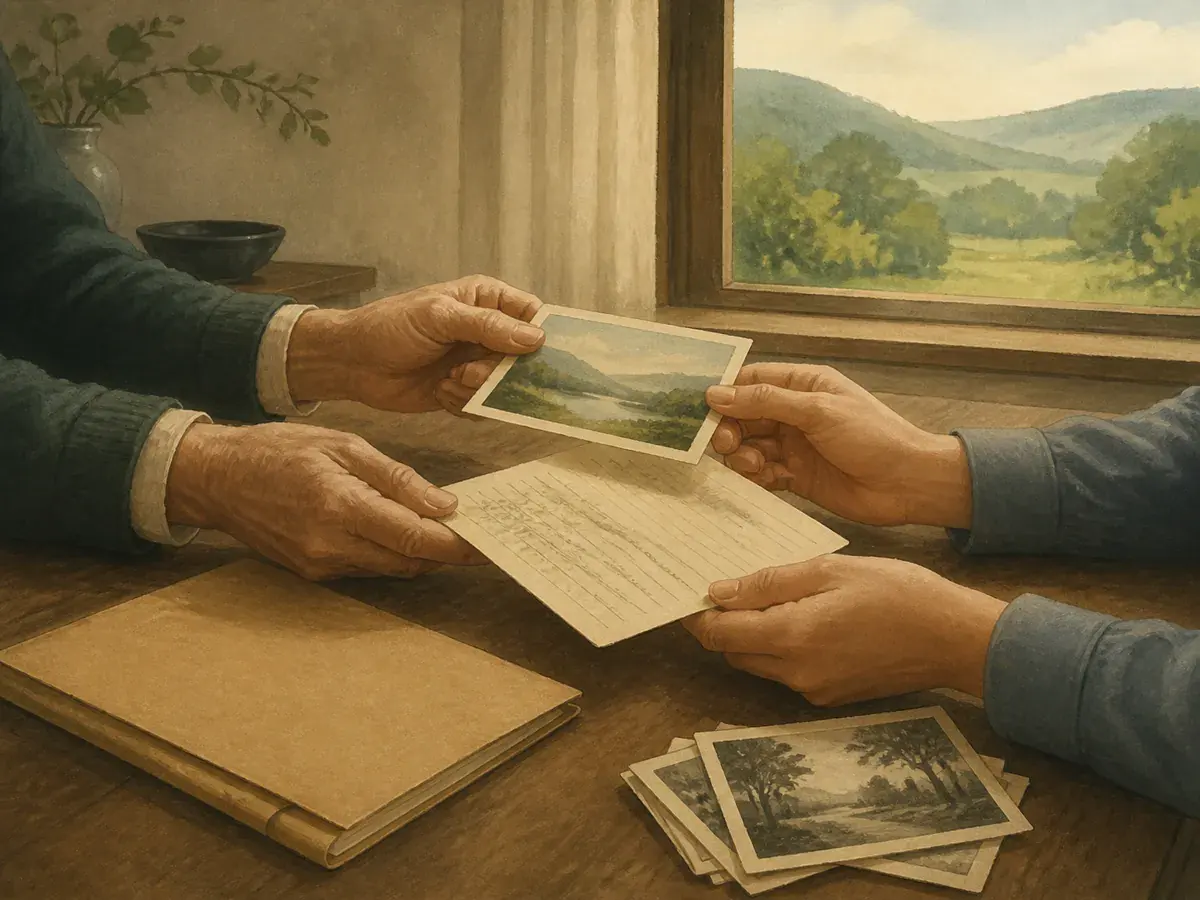
But not a single photo from that time remains.
If I had records, I could have looked back on them again and again, and my attachment would have deepened.
I sometimes think about that.

Without the stepping stones, I would never have met the earwigs.
Without the maintained ski slope, the memory of grasshoppers would never have been made.

Untouched nature is important, of course.
But human-maintained places—the stone pavers by the front door, the mowed ski slope, the managed satoyama—
these are the places where children find opportunities to encounter living things.

Higher resolution of your town leads to deeper attachment

Do you know the name of the street trees along the road you walk every day?
Can you tell the difference between the two types of crows you commonly see in town?

Not knowing doesn't cause any problems in daily life.
But once you learn—
the same road starts to look just a little different.

Learning names. Noticing seasonal changes.
That means the "resolution" of the place you live in goes up.

When resolution goes up, attachment is born.
When attachment is born, you want to take care of that place.

ikimon.life wants to create that spark.
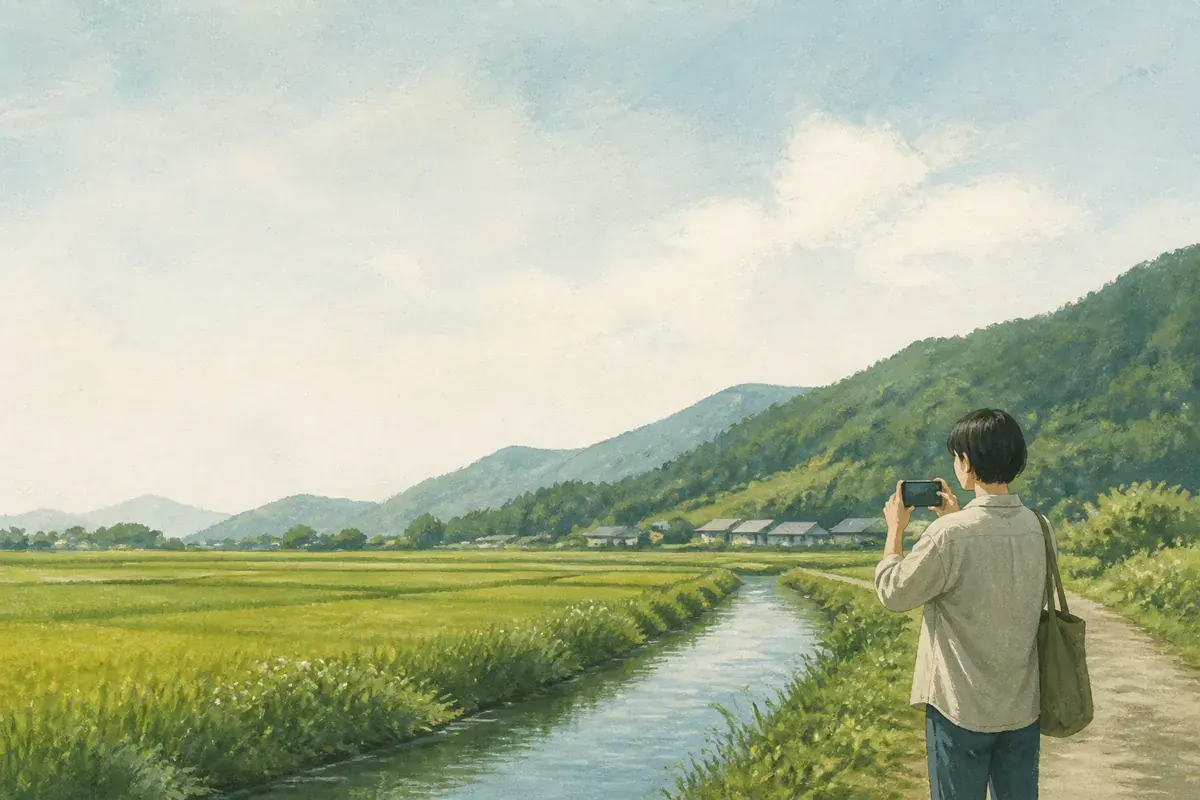
Find, record, look back.
Just that slowly changes your relationship with your town.

I don't want to lose the bond between children and nature.

Why Regional Revitalization?

Regional revitalization isn't something one person can achieve alone.
I don't think ikimon.life alone can make it happen either.

But I believe that if the adults in a community—parents, teachers, neighbors—
create opportunities to walk in nature with children,
something will gradually begin to change.

Walking in nature promotes physical and mental health.
Learning about local nature through observation builds attachment to the community.
And when more people love their hometown, it becomes a force that helps the region survive.

ikimon.life wants to be the tool that sparks this cycle.
The ones who use it are the people living in the community.

This isn't just intuition.
Surveys across Japan consistently show the same thing.

1

Attachment to a region is always talked about as a combination of "nature" and "human connections"

In a survey of middle school students in Katori City, the top reason for liking their hometown was "rich nature" (72.8%), followed by "kind and friendly local people" (58.3%). In Hamamatsu, 81.8% of young people said they "like Hamamatsu," citing human relationships and natural environment as attractions.

2

Why children want to "come back"—"rich nature," "kind people," "birthplace"

In a survey of middle school students in Iijima Town, the top reason for "wanting to live or return" was "lots of nature, clean air" (45.5%). Even among those "somewhat wanting to return," "nature-rich and livable" was the most common at 62.5%.

3

Having a "trusted adult" outside the family supports children's sense of security

A survey in Joetsu City reported that 55.18% of children have a "trusted adult" and 51.71% have "an adult who cares about them." Nature observation naturally creates these connections with adults outside the family.

It's not just about children. Adults need to thrive too.

When we talk about regional revitalization, it tends to focus on "bringing young people back" or "increasing the number of children."
But if the adults living there aren't physically and mentally well,
they won't have the capacity to watch over children or the strength to support the community.

In fact, walking in nature has scientifically proven benefits.

🧠

Walking in natural environments activates the prefrontal cortex

Compared to urban environments, walking in nature has been shown to reduce stress hormones, restore attention, and enhance creativity. Observing living things requires active attention, further increasing cognitive engagement.

👟

9,800 steps per day reduces dementia risk by 51%

Based on a large-scale study (78,430 participants) published in JAMA Neurology. Walking requires no special equipment or money—it's the most accessible health habit. Adding "observation" creates curiosity and a sense of achievement that simple walking alone cannot provide.

Adults who are healthy, smiling, and have room to breathe.
Because such adults are nearby, children can safely go outside.
Walking together with children, adults naturally exercise and feel lighter.

Nature observation naturally creates this cycle—
children's curiosity, adults' health, cross-generational interaction—
without any special mechanism.

Nature observation isn't everything for regional revitalization.
But it can surely make a difference.

744 municipalities may disappear

In April 2024, a report by the Population Strategy Council
shocked many people.

Municipalities where the population of women aged 20-39 is projected to decrease by over 50% by 2050—
so-called "municipalities at risk of disappearing"—total 744 nationwide.
That's 43% of all municipalities.

744 / 1,729
At-risk municipalities Total municipalities

Some regions face particularly severe situations.

群馬県 南牧村 -88.0%
青森県 外ヶ浜町 -87.5%
北海道 歌志内市 -86.7%
秋田県全体 96%が消滅可能性
青森県全体 87.5%が消滅可能性

Behind the numbers are someone's hometowns.
The fields and mountains where they ran as children. The river along the school commute. The autumn ski slope.
Memories of encountering living things in those landscapes, of someone teaching them a name.

When a municipality disappears, it means the places where such memories are born
will be gone.

I want to deliver ikimon.life to the most critically affected municipalities.

For municipalities where the decline rate of young female population exceeds 80%—
the regions facing the harshest circumstances—
we will provide all features of ikimon.life completely free of charge.

I don't expect this alone to change things dramatically.
But if a small opportunity through nature
can help even one child think "I love this place"—

I want the memories of growing up in this town to remain for the next generation.

A Sustainable Model

IKIMON Inc. is a one-person startup.
Because it's not a large organization, I can move nimbly.

Revenue from the Public plan for enterprises and large municipalities
is sufficient to sustain the company.
That's why we can deliver free services to the regions that need them most.

Free

At-risk municipalities (80%+ young female decline rate)

All platform features provided completely free, including report output and data export.

Community

Citizens & Small Organizations

Free to post observations, identify species, use the field guide, and join observation events.

Public

Enterprises & Large Municipalities

Paid plan with full species lists, CSV export, and evidence reports for surveys and official reporting.

Because we're small, we can deliver to where it matters most.

This is a project that has just begun.
We will move forward steadily, step by step.

I would be grateful for your support.

Takeshi Yamaki

Takeshi Yamaki

IKIMON株式会社 CEO

Let's connect nature and community together.

PROTOTYPE — TESTING

The ikimon.life prototype has been developed and is currently in testing.
Please wait a little longer until it is ready for public release.

If you are in a municipality at risk of disappearing (80%+ young female population decline rate)
and would like to consider a pilot deployment at the prototype stage, please contact us.

Contact Us